
Supplier of stainless steel, heat-resistant, and acid-resistant sheets in Grade 1 and Grade 2 GAMMASTEEL
We also guarantee efficient and prompt customs clearance for customers outside the European Union.


Have questions? Write to us!
Do you have questions about available materials, steel grades, or ordering options? Write to us — we will help you choose the right solution for your needs and working conditions. We reply directly, clearly, and without unnecessary formalities.
Stainless and heat-resistant steel semi-finished products
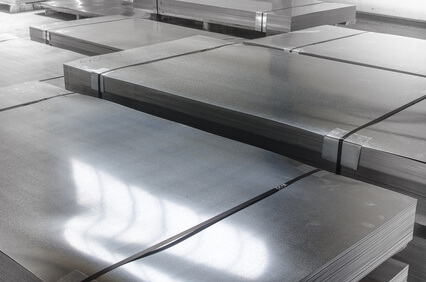
Stainless steel semi-finished products are the basis for many industrial processes: cutting, bending, welding, turning, milling, grinding, or further surface treatment. It is precisely the quality and proper selection of the material that determines whether the final element will maintain corrosion resistance, adequate dimensional stability, and durability under everyday working conditions.
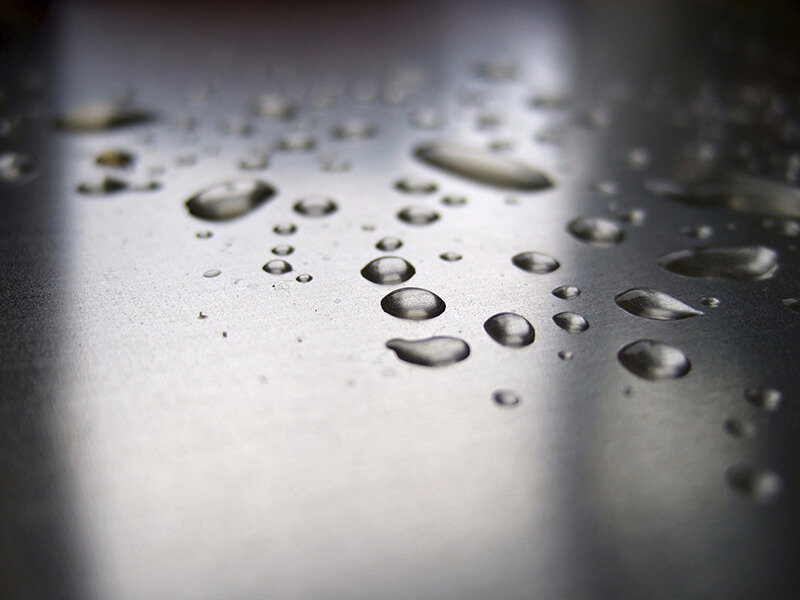
Stainless steel owes its resistance primarily to its chromium content. A thin passive layer forms on the surface of the material, which limits the risk of corrosion and can rebuild itself in the presence of oxygen. In practice, this means that properly selected stainless steel performs well wherever ordinary carbon steel would degrade too quickly.
Heat-resistant steel is selected when the material is expected to operate at elevated temperatures and maintain oxidation resistance. Alloying additions such as chromium, nickel, silicon, or aluminum are important here, as they help maintain the material’s properties under harsher thermal conditions. For this reason, heat-resistant steel is used, among other things, in industrial installations, furnace elements, covers, housings, and components operating in contact with high temperatures.
Depending on the customer’s needs, semi-finished products can be used in many industries, including:
- machine and manufacturing industry,
- steel structure construction,
- sheet metal and workshop processing,
- food, chemical, and technical industries,
- production of hidden elements, covers, frames, housings, and equipment parts,
- projects where resistance to moisture, chemicals, or changing working conditions is important.
When offering steel semi-finished products, we pay attention not only to the material grade itself but also to its intended use. A visible and decorative detail requires a different approach than a structural element hidden inside a machine. This allows for rational budget management without sacrificing the most important performance parameters.
Available sheet metal grades
The selection of sheet metal should not be based solely on thickness and price. Equally important is the steel grade, quality class, surface type, and whether the material is to serve a visible, structural, technological, or auxiliary function. At GammaSteel, we help select sheet metal for the working conditions, type of processing, and expected final result. In practice, austenitic steels are often used, such as 1.4301 / AISI 304 and 1.4404 / AISI 316L. Grade 304 is a universal solution for many industrial and technical applications, while 316L, thanks to the addition of molybdenum, provides better resistance in more aggressive environments, especially where chlorides, moisture, or chemicals are present.
Depending on the needs, ferritic, martensitic, or duplex steels may also be used. They differ in structure, hardness, corrosion resistance, machinability, and mechanical properties. Therefore, before purchasing, it is worth determining whether the material will be welded, bent, ground, polished, painted, or working under load.
An important element of the offer is also the division into 1st grade and 2nd grade sheet metal. 1st grade sheet metal is a full-value material, selected where high aesthetics, repeatability of parameters, surface quality, and complete material documentation count. It is the right choice for visible, precise applications or those requiring full compliance with technological assumptions.
2nd grade sheet metal is a cheaper alternative to full-value material. It may have scratches, discolorations, stains, minor dents, or other visual defects, but often retains similar chemical properties to 1st grade sheet metal. This is a good solution wherever surface aesthetics are not crucial, and corrosion resistance and the possibility of further processing remain the most important.
2nd grade sheet metal works particularly well for hidden elements, auxiliary structures, machine parts, workshop applications, sheet metal processing, and projects in which the material will later be ground, painted, built-in, or invisible to the user. For many companies, it is a realistic way to reduce costs without unnecessarily lowering the functionality of the finished element.
When choosing stainless steel or heat-resistant steel, it is worth following a simple rule: the material should correspond to the working conditions, and not just look good in the specification. Therefore, at GammaSteel we talk with clients about the application, working environment, required processing, and budget. This makes it easier to select steel semi-finished products that will be practical, durable, and economically justified.
Frequently Asked Questions (FAQ)
Recently on our blog
No posts